How to fix a dripping shower head
Tools & Materials You Will Need
- Teflon tape (Plumbers tape)
- Adjustable wrench and a rag to protect finish
- White vinegar and a plastic bag
Quick Diagnostic Check
| Symptom | Cause | Solution |
|---|---|---|
| Leaking from the joint | Missing or worn Teflon tape | Unscrew, apply new tape, and tighten |
| Spraying weird directions | Mineral buildup in nozzles | Soak the head in white vinegar overnight |
Step-by-Step Instructions
How to Fix a Dripping Shower Head
By a handyman with 20+ years on the job

Introduction
A dripping shower head is annoying, wastes water, and can raise your water bill. The good news: most leaks are simple to fix with basic tools and a little patience.
Pro Tip: Before you buy any parts, take clear photos of your shower handle, trim plate, and shower head. This makes it easier to match the right replacement parts at the hardware store.

Common Causes of a Dripping Shower Head
- Worn-out rubber washers or O-rings
- A bad cartridge or valve inside the wall
- Mineral buildup inside the shower head
- Loose connections with old or damaged thread tape
You won’t always know which one it is until you open things up. We’ll start with the easiest fixes and move to the harder ones.
Safety First
- Turn off the water when working on valves or cartridges.
- Work slowly so you don’t crack any trim, tile, or plastic parts.
- If anything feels stuck, don’t force it. Apply more penetrating oil or ask for help.
Tools and Materials You’ll Need
- Adjustable wrench
- Phillips screwdriver
- Flathead screwdriver
- Allen (hex) key set (for certain handles)
- Plumber’s (Teflon) tape
- Replacement washers or O-rings (assorted pack)
- Replacement cartridge or valve (if needed, brand-specific)
- Old rag or towel
- White vinegar (for cleaning mineral buildup)
- Small bowl or container
- Penetrating oil (optional, for stuck parts)
Step-by-Step: Check if the Shower Head Itself Is the Problem
-
Turn off the shower
Make sure the shower handle is in the OFF position.
Let the shower sit for a few minutes to see if the drip slows down or stops.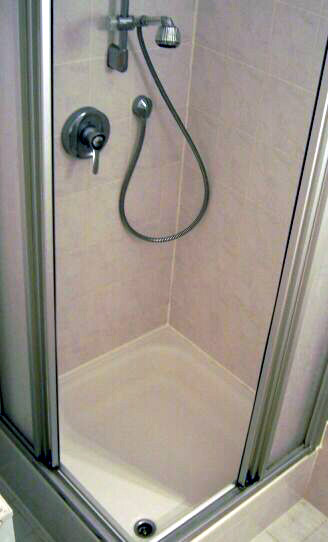
-
Watch the drip closely
If the drip slows down and almost stops, the problem might be the shower head.
If it keeps dripping at a steady rate, the problem is more likely inside the valve or cartridge. -
Place a towel in the tub or shower floor
Lay down an old towel under where you’ll be working.
This helps catch any small parts and prevents scratching the tub or floor.
Step-by-Step: Remove and Clean the Shower Head
-
Unscrew the shower head
Grip the shower arm (the pipe coming out of the wall) with one hand.
Use the adjustable wrench to turn the shower head counterclockwise and remove it. Use a rag between the wrench and metal to avoid scratches. -
Check the washer and screen inside
Look inside the back of the shower head.
Remove the small rubber washer and any filter screen with a flathead screwdriver or your fingers. -
Clean mineral buildup
Fill a bowl with white vinegar.
Soak the shower head, washer, and screen for at least 30 minutes (longer if they are very crusty). -
Rinse and scrub
Rinse the parts with clean water.
Scrub gently with an old toothbrush to remove any remaining mineral deposits. -
Inspect the washer
Look for cracks, flat spots, or stiffness in the rubber washer.
If it looks damaged or very hard, replace it with a new washer of the same size. -
Re-wrap the shower arm threads
Clean the threaded end of the shower arm with a rag.
Wrap plumber’s tape clockwise around the threads 3–4 times to make a good seal. -
Reinstall the shower head
Screw the shower head back on by hand, turning clockwise.
Use the wrench for a gentle final snug, but do not over-tighten or you can crack it. -
Test for drips
Turn on the water, then turn it off.
Watch the shower head for a few minutes. If the drip is gone, you’re done. If not, move on to the valve.
Step-by-Step: Check If the Valve or Cartridge Is Leaking
If the shower head is clean and the washer is good, but it still drips, the valve or cartridge inside the wall is likely worn.
-
Turn off the water supply
Locate the main water shutoff for your home (often near the water meter, basement, or utility room).
Turn off the water to avoid a flood when you open the valve. -
Open the shower to release pressure
Turn the shower handle ON after shutting the main water.
Let any leftover water drain out, then turn the handle OFF again. -
Remove the handle
Look for a small cap or plug on the handle (often with hot/cold markings).
Pry off the cap gently with a flathead screwdriver, then unscrew the screw underneath and pull off the handle. -
Remove trim and access the valve
Unscrew the trim plate (the metal or plastic plate against the wall).
Gently pull it off and set it aside; you may see the valve body and cartridge inside the wall. -
Identify the cartridge or valve type
Look for a brand name or part number on the valve or cartridge (Moen, Delta, Kohler, etc.).
Take a photo so you can match the exact part at the store.
Step-by-Step: Remove and Replace the Cartridge (Typical Single-Handle Shower)
Note: There are many designs, but this is the general idea.
-
Check for a retaining clip or nut
Look for a metal clip or a large retaining nut holding the cartridge in place.
Remove the clip with pliers or unscrew the nut with a wrench. -
Pull out the old cartridge
Grip the cartridge stem with pliers.
Pull straight out; rock it gently if needed. If it’s stuck, apply penetrating oil and wait a few minutes, then try again. -
Compare the new and old cartridges
Match the new cartridge with the old one: same length, same shape, same tabs or notches.
If anything looks different, do not install it. Get the correct part. -
Clean the valve body
Wipe inside the valve body with a clean rag to remove debris or mineral bits.
Be careful not to scratch the inside surfaces. -
Install the new cartridge
Align the tabs or notches on the cartridge with the matching slots in the valve body.
Push the new cartridge in firmly until it is fully seated and even with the valve body. -
Reinstall clip or retaining nut
Reinsert the metal clip or screw on the retaining nut.
Make sure it is fully in place so the cartridge cannot move or pop out. -
Reassemble the trim and handle
Reattach the trim plate and screw it back into the wall.
Slide the handle back on, tighten the handle screw, and snap the cap back in place. -
Turn water back on and test
Turn the main water supply ON slowly.
Turn the shower handle ON and OFF a few times, then check the shower head for drips.
Step-by-Step: For Two-Handle Showers (Separate Hot and Cold)
If you have separate hot and cold knobs, the leak usually comes from one side.
-
Determine which side leaks
Turn off the hot handle only and see if the drip changes.
Then try turning off only the cold handle. The side that affects the drip is usually the bad one. -
Turn off the water supply
Shut off the main water like before.
Open both handles to release pressure, then turn them OFF. -
Remove the leaking handle
Pop off the decorative cap on top.
Unscrew the handle screw, then pull off the handle. -
Remove the stem or cartridge
Under the handle, you’ll see a stem or cartridge.
Use a wrench to unscrew the stem nut and pull out the stem or cartridge. -
Inspect washers and O-rings
At the end of the stem, look for a rubber washer held by a small screw.
Unscrew it, replace the washer, and check/replace any O-rings along the stem. -
Reinstall the stem
Insert the stem back into the valve.
Tighten the retaining nut firmly, but not so hard that you strip it. -
Reattach the handle and test
Reinstall the handle and cap.
Turn the water back on and test for drips. If it still drips, repeat the process on the other side.
When to Call a Professional
- The valve body is cracked or badly corroded.
- You can’t pull out the cartridge or stem without extreme force.
- There’s water leaking inside the wall or behind the trim.
- You feel unsure about any step and don’t want to risk damage.
Sometimes paying a pro for one hour saves you from a very costly wall repair later.
Final Check and Maintenance Tips
- After the repair, run the shower for a few minutes, then shut it off and watch for drips.
- Check around the handle and trim plate for any signs of leaking.
To avoid future drips:
- Clean the shower head in vinegar every few months if you have hard water.
- Operate the handle gently instead of yanking it.
- Fix small drips early before they wear out the valve more.
If you tell me your shower brand and whether it’s single-handle or two-handle, I can walk you through a brand-specific cartridge or stem replacement.
Frequently Asked Questions
Is replacing a Moen shower cartridge different than a Delta cartridge?
Yes. Moen utilizes a retaining clip shaped like a horseshoe that must be pulled straight UP out of the brass valve body before the cartridge can slide out. Delta cartridges screw in with a large brass bonnet nut that must be unscrewed.
How do I fix low water pressure that only happens on the hot water side?
If the cold water blasts but the hot water trickles, the rubber balancing spool inside the shower cartridge is jammed due to hard water calcium. You can try soaking the cartridge in pure white vinegar for 2 hours to dissolve the minerals, but replacing it is much faster.
I removed the handle and screws, but the cartridge is absolutely stuck. Help!
Do not pull it with huge plier brackets, because tearing the brass pipe in the wall is a catastrophic repair. Buy a specialized $15 “Cartridge Puller Tool” from a hardware store. It braces against the metal wall to pull the plastic core straight out flawlessly.
What if water is steadily dripping behind the wall into the floor below?
This is an absolute emergency. The threaded fitting connecting the valve to the house plumbing has fractured. Shut off the main house water valve immediately and call a licensed plumber, as they will need to cut the drywall to replace the brass fittings.